
Last updated: October 13, 2026
Quick answer: for a bulk set of SEO articles, group them by search intent and topic depth, then build each cluster around one strong pillar page and tightly related supporting articles. If your current pile of drafts looks like 20 slightly different takes on the same keyword, the fix is not “more keywords” — it is a clean map of what each page should own, what it should support, and what it should not try to rank for.
Key Takeaways
- For a broad subject with several related questions, a pillar plus 4 to 12 supports is a solid starting point.
- For a large batch, sort by intent, parent topic, and whether to keep, merge, or delete.
- If competition, audience range, or linking limits change, the cluster plan changes too.
- Be skeptical of advice that makes every cluster overly broad.
If you are staring at 30, 50, or 200 SEO articles and wondering how to stop them from cannibalizing each other, this is the answer that matters: cluster them by the job the searcher wants done, not by the words in the title.
What Actually Determines the Right Cluster Structure
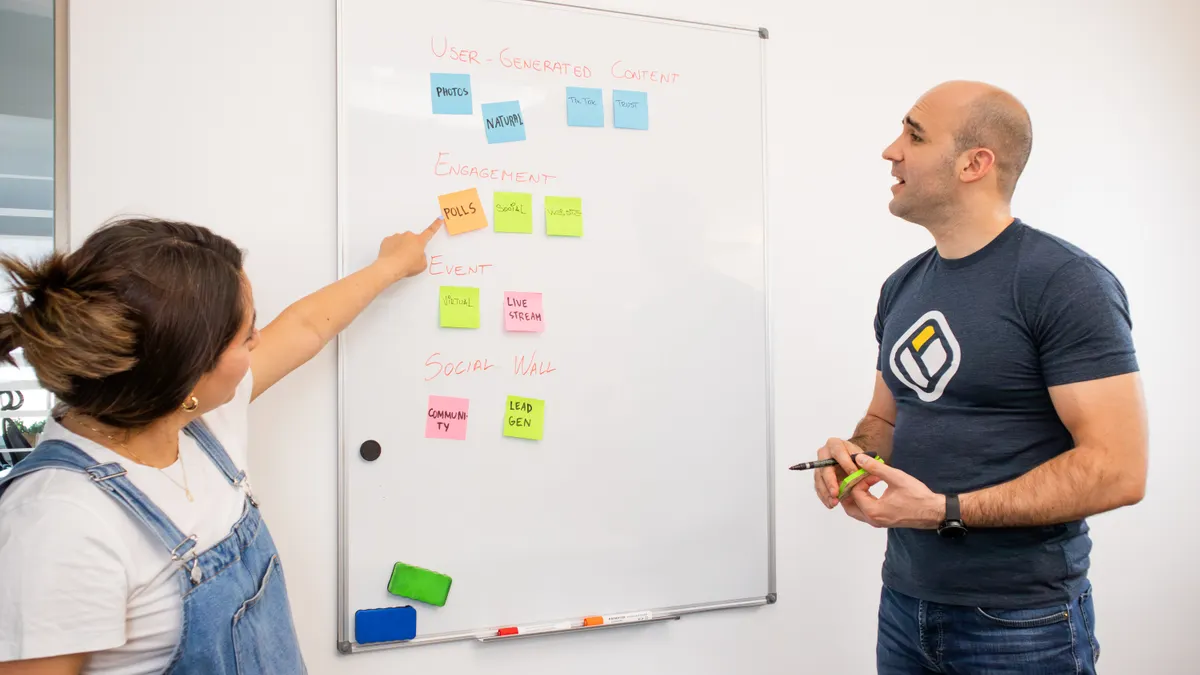
If your articles cover one broad subject with several buyer or reader questions underneath it, then one pillar page plus 4 to 12 supporting pieces is usually the right shape. If your pile spans several unrelated intents, then forcing everything into one cluster will make the content flatter and weaker.
The mistake I see most often is grouping by similarity alone. Two articles can share the same keyword stem and still belong in different places. “Best CRM for agencies” and “how to migrate contacts into a CRM” are related, but they serve different moments in the journey. One is decision-stage. The other is task-stage. Put them in the same cluster only if the cluster topic is broad enough to hold both without turning the pillar into mush.
The cleanest way to decide is to ask three questions for each draft:
- What exact problem does this page solve?
- What stage is the reader in: learning, comparing, or doing?
- What single parent topic can absorb this page without confusion?
If the answer to question 2 changes, the cluster often changes too.
Here is the practical rule I would use: group pages by intent first, subtopic second, and keyword last. Keyword overlap matters, but it is the weakest of the three. Search engines are looking for topical coverage, not a spreadsheet of repeated phrases.
| Situation | Best Path | Why Other Options Fail |
|---|---|---|
| 10–20 articles around one product or service | 1 pillar + 6–10 cluster articles | A flat list of articles leaves the authority scattered |
| Mixed informational and commercial articles | Split into separate clusters by intent | One cluster turns muddled and loses ranking clarity |
| Several near-duplicate drafts | Consolidate before clustering | Multiple pages compete for the same query |
| One huge topic with many subquestions | Use 1 pillar and multiple sub-clusters | One pillar alone cannot carry every angle |
If you want a benchmark, think in terms of 5 to 15 supporting pages around a pillar when the topic is moderate in size. Beyond that, split the topic unless the pillar is very broad and the supporting pieces are truly distinct.
Quick check: if you cannot explain each draft in one sentence without using the same noun twice, your cluster is probably too vague or too wide.
How do I sort bulk SEO articles fast?
If you need to sort a large batch in under a day, then do a three-column pass: intent, parent topic, and keep/merge/delete. This is faster and more accurate than trying to “feel” your way through titles.
Start with a spreadsheet and add these columns:
- Title
- Primary query
- Search intent
- Funnel stage
- Parent cluster
- Keep, merge, or cut
- Notes on overlap
Then sort with this sequence:
- Group by intent: informational, commercial, or transactional.
- Inside each intent, group by parent topic, not by exact phrase.
- Mark obvious duplicates for merge if they answer the same query in the same way.
- Promote one page to pillar status for each stable topic.
- Assign supporting pages to one cluster only, unless they truly serve two different intents.
- Flag thin pages that do not add unique value and decide whether to expand or remove them.
A 1,000-word article can still be wrong for a cluster if it repeats the same angle as three others. A 400-word article can be valuable if it covers a narrow step that the pillar cannot handle cleanly.
Tools that help here are boring but useful: Google Sheets for sorting, Screaming Frog for crawling titles and H1s, and Ahrefs or Semrush for seeing keyword overlap. I would not start with a fancy AI map. It tends to mirror the mess you already have unless you already know what belongs together. Ahrefs and Semrush both publish guidance on topic research and keyword grouping, and Google Search Central explains how search systems evaluate helpful content. See https://developers.google.com/search/docs/fundamentals/creating-helpful-content, https://ahrefs.com/blog/keyword-grouping/, and https://www.semrush.com/blog/keyword-clustering/.
When you sort fast, the dangerous trap is over-merging. If two articles share a keyword but solve different jobs, keep both and give them separate roles. A “how to” article should not be forced into a “best tools” article just because both mention the same product category.
Quick check: if your spreadsheet has more than one “maybe” column after the first pass, you are probably sorting by title style instead of intent.
The 3 Conditions That Change Everything

If any of these three conditions are true, then the clustering plan changes: competition level, audience breadth, and internal linking capacity. Ignore those, and the cluster looks neat on paper but falls apart in practice.
1) The SERP is dominated by broad explainers
If the top results are long guides, then a short pillar and a few shallow articles will not be enough. You need a stronger pillar, usually 1,500 to 3,000 words, with supporting pages that attack specific subquestions the pillar cannot answer deeply. If the SERP is packed with list posts, then your cluster can be more utility-focused, but you still need clear support articles, not content that all says the same thing in different clothes.
2) Your audience includes beginners and advanced users
If the same topic serves both, split the cluster by sophistication. A beginner does not want a 2,000-word comparison of model names, edge cases, and implementation trade-offs before they understand the basics; in YMYL or technical topics, check the safest structure with an editor, subject-matter expert, or other qualified professional, and keep an eye on guidance from Google Search Central and the UK government’s content design guidance. Put foundational articles in one branch and advanced articles in another branch under the same parent topic. That keeps the cluster readable and reduces the risk of confusing the reader. Google Search Central’s helpful-content guidance and GOV.UK’s content design guidance are both useful references here: https://developers.google.com/search/docs/fundamentals/creating-helpful-content and https://www.gov.uk/guidance/content-design/writing-for-gov-uk.
3) You can only support a few internal links
If your site is small or your publishing cadence is slow, then a cluster with 12 dependent articles may be too ambitious. In that case, build a tighter 4- to 6-article cluster and make each page pull more weight. A weak cluster with missing links performs worse than a small cluster that is fully connected.
Here is the sequence I would use for each cluster:
- Choose the parent topic in one sentence.
- List the 5 to 10 questions a serious reader would ask next.
- Assign one question per supporting page.
- Check that each page has a distinct intent.
- Confirm the pillar can link to every support page naturally.
- Confirm each support page links back to the pillar and to 1 to 3 siblings where relevant.
The exact number of supporting articles is less important than the separation between them. If two articles can be merged without losing a useful answer, they probably should be.
Quick check: if the cluster would break the moment you remove three internal links, it is too fragile and needs simplification.
When the Standard Advice Is Wrong
If someone tells you to make every cluster “as broad as possible,” then be careful. Broad clusters are fine for a strong site with clear topical authority; they are a bad fit for a site still sorting out its own content. Narrow clusters often rank faster because they create a cleaner pattern.
The standard advice also fails when you have mixed content types. A tutorial, a comparison page, a pricing page, and a case-study-style article should not be shoved into one neat pile just because they mention the same software category. That creates a muddy reading path. Instead, let the cluster reflect the user’s next step.
For example, if your topic is email marketing software, then the right cluster may include:
- “What is email marketing software?” — foundational explainer
- “Best email marketing software for small teams” — comparison
- “How to set up a welcome sequence” — task guide
- “Email deliverability checklist” — technical support page
- “Pricing differences between popular tools” — commercial comparison
Those are related, but they do different jobs. A good cluster respects that.
I would also reject the idea that every cluster needs the same number of articles. A highly specific subject may only need 3 strong pieces. A huge subject may need 20. The number is not the signal; the coverage is.
One honest drawback: cluster work takes editorial discipline. It is slower than pushing out isolated articles, and it can force you to kill drafts you spent time on. That is painful, but it is usually cheaper than keeping five pages that all dilute the same query.
Quick check: if your advice would still sound reasonable after swapping in “dentist,” “insurance,” or “software,” it is probably too generic to be useful.
Edge Cases Where Normal Clustering Breaks Down
If any of these situations apply, then the usual pillar-plus-spoke model needs adjustment.
-
You have one keyword with multiple meanings
What changes: search intent splits.
What to do instead: separate the meanings into different clusters. A single term can hide two different audiences. -
Your site has many product-led pages
What changes: commercial intent dominates.
What to do instead: create clusters around use cases and comparisons, not only educational topics. -
You inherited a messy content library
What changes: consolidation matters more than expansion.
What to do instead: map duplicates first, then prune, merge, and relabel before building new clusters. -
A topic is too small for 5–10 articles
What changes: forcing a large cluster creates thin articles.
What to do instead: publish one pillar and maybe 2 to 3 tightly focused support articles, then stop. -
The topic is highly technical
What changes: audience knowledge varies sharply.
What to do instead: split beginner and advanced paths so the cluster does not become unreadable. -
You are in a regulated space
What changes: accuracy matters more than breadth.
What to do instead: keep clusters tighter and let authoritative sources, such as Google’s Search Central documentation on helpful, people-first content and the UK government’s guidance on content clarity, shape the editorial standard. Google Search Central and GOV.UK content design guidance are both worth reading here.
Quick check: if your topic has legal, medical, financial, or technical risk, you should bias toward narrower clusters and clearer review processes.
A Practical Workflow for Turning a Content Dump Into Clusters
If you have a folder full of drafts, then the fastest clean-up is a four-pass workflow: audit, group, assign, and connect. This works better than trying to build the perfect architecture from scratch.
- Audit the inventory. List every URL, title, and primary query in one sheet.
- Tag intent. Mark each article informational, commercial, or transactional.
- Group by parent topic. Sort articles into topic families of 3 to 15 items.
- Name the pillar. Pick the article that deserves to be the main entry point.
- Assign roles. Decide which articles are support, comparison, task, or definition pages.
- Merge or cut overlap. If two articles answer the same question, keep the better one and fold the rest into it.
- Build internal links. Pillar to support, support back to pillar, and side links only where they help the reader move forward.
A useful standard is to ask whether each article can earn its own click. If it cannot, then it may not deserve to exist as a standalone URL. That sounds harsh, but it saves crawl budget and makes the cluster easier to understand.
I would also keep a “do not target” column. That sounds small, but it can help prevent keyword cannibalization; if the topic affects sensitive medical, legal, or financial decisions, consult a qualified professional before changing content architecture, and follow authoritative guidance such as Google Search Central’s helpful-content documentation. If Article A owns “how to group bulk SEO articles into content clusters,” then Article B should not chase the same phrasing unless it has a clearly different angle, such as software workflow or taxonomy design. See https://developers.google.com/search/docs/fundamentals/creating-helpful-content.
Quick check: if your archive has more than 20 similar drafts and no documented pillar pages, you need architecture before you need more writing.
The Cleanest Way to Decide What Belongs Together
If you want the shortest answer I can give, then use this test: articles belong in the same cluster when they answer adjacent questions in the same search journey. If they answer different jobs, different levels of knowledge, or different buying stages, split them.
That is the whole game. Not every related article should sit under one roof, and not every roof should be huge. A good cluster feels obvious after the fact because the reader can move through it without getting lost.
For most bulk SEO libraries, I would choose fewer, sharper clusters over one giant topical blob. The blob looks efficient in a spreadsheet and sloppy in search.
FAQ
How many articles should be in one content cluster?
Usually 4 to 12 supporting articles around one pillar is a practical range, but smaller clusters can work if the topic is narrow.
Should I cluster by keyword or by topic?
By topic and intent first. Keywords help you label the articles, but they should not be the main organizing rule.
Can one article belong to two clusters?
Sometimes, but only if it serves two clearly different search journeys. If you are forcing it, it probably belongs in one cluster only.
What should I do with duplicate articles?
Keep the strongest article, merge the useful parts of the others into it, and retire the rest if they no longer add distinct value.
Do I need a pillar page for every cluster?
Yes, if the topic is broad enough to support one.
Drafted with AI; not yet reviewed by a person.